The big sleep

comments 4
Astronomy / Health / Medicine / Zoology

Bats do it. Bears do it (sort of). Some birds do it. Even bumblebees do it. But at this point in time, humans can’t. I’m talking about hibernation. Animals hibernate to save energy. Sleeping through a long cold winter sounds appealing, doesn’t it? But the reason NASA and the European Space Agency wants to know if human hibernation is possible is because it would make the trip to Mars a hell of a lot less boring (and cheaper).
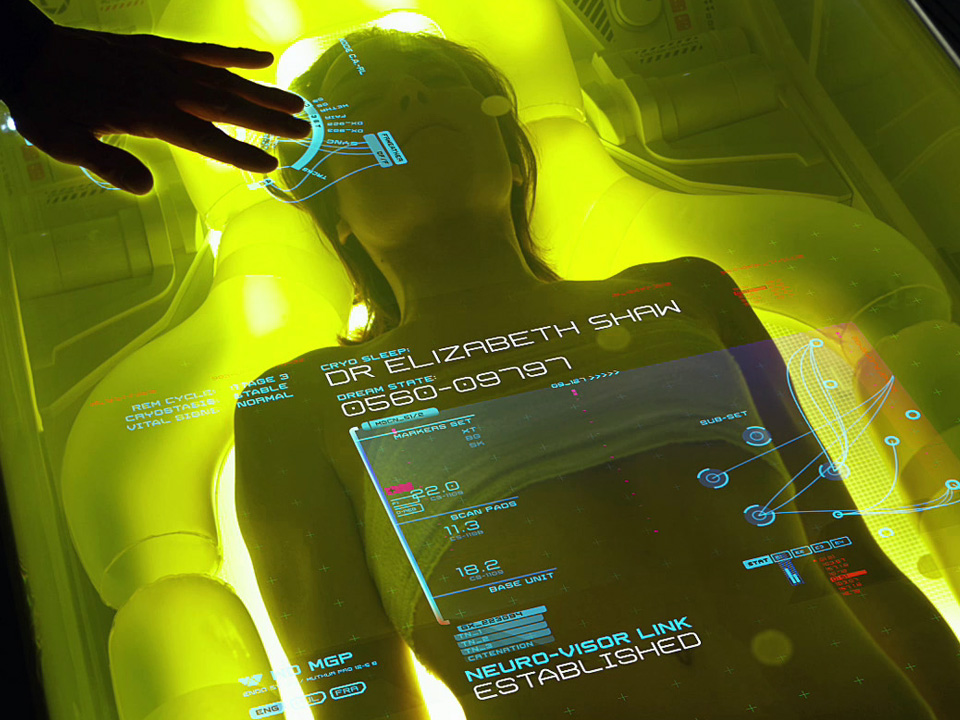
Cryosleep

“Cryosleep” is a Hollywood sci-fi staple. Image credit 20th Century Fox.

Chipmunks, squirrels and dwarf lemurs

During hibernation, all the chemical reactions that keep a body alive slow way, way down. A hibernating chipmunk’s heart beats only five times each minute rather than the usual 200 and an Arctic Ground Squirrel’s body temperature, normally 37° C, can drop as low as -3 ° C without the body freezing. Lots of animals undergo what scientists call torpor  — a short period of reduced body metabolism, generally just for a few hours at a time. What you think of as hibernation is also called long-term torpor. During both long- and short-term torpor, body functions are reduced to a minimum and oxygen requirements, heart rate, breathing rate, energy consumption and body temperature all drop dramatically.

Originally we thought torpor was a way of coping with cold: sleeping away a long freezing winter in a cozy underground burrow sounds good. Especially if you’ve gorged yourself and can live on your own fat reserves. But we now know torpor has more to do with saving energy when there’s not much food around than cold – even some tropical animals hibernate.

Chipmunks and squirrels aren’t our close relatives, and we used to think primates have such energy-hungry brains that torpor would be impossible. But we now know that some primate species – the dwarf lemurs of Madagascar – hibernate. You may think that while cute, a lemur isn’t quite the same as a human when it comes to brain-power (and therefore oxygen requirements).  But there are extraordinary examples of humans surviving lengthy periods without much oxygen.

I will survive

In 2014, a 16-year old runaway survived a five-and-a-half hour flight from California to Hawaii unharmed. What’s the big deal, you say? He travelled inside the wheel well of the plane, as it reached 38,000 feet and the air temperature dropped as low as -62 ° C. Doctors believe he lost consciousness for most of the flight, and effectively entered torpor.

Radiologist Anna Bagenholm survived after being submerged in water under ice as a result of a skiing accident. Her heart stopped beating for three hours and her body temperature dropped to 14° C but she didn’t drown. Mitsutaka Uchikoshi survived 24 days without food or water after falling in snow – his core body temperature was 22° C when rescued. Such tales of survival aren’t common but they do show our bodies can cope with extremes.

Given that your cells can’t survive long without oxygen, of course you’d never choose such crazy conditions. But there are many medical situations that result in your body struggling to get enough oxygen to all your cells. Think a heart attack, major bleeding or stroke for example.

Over the past few decades, doctors have worked out that lowering body temperature and metabolism reduces your cells need for oxygen. What this means is that artificially cooling a body and placing it in a state of ‘suspended animation’ can buy precious time for doctors to save you before your brain or other body parts are permanently damaged by lack of oxygen. This is called therapeutic hypothermia and has become routine in many hospitals.

A space odyssey

What’s all this got to do with space travel? Getting to Mars will take about eight months and there would be many advantages to astronauts spending the journey in a state of torpor. Aside from the fact the journey would be much less tedious, crews would need significantly less air, food and water. Astronauts could also do without space for cooking, eating, exercising and entertainment and they would produce less waste.

A major bonus is the possibility a hibernating human may not suffer radiation damage: at the moment people can’t spend more than a year in space without significantly increasing their risk of getting cancer.

And not to be overlooked: spending the trip in a state of extended torpor would take away a lot of the psychological challenges people are expected to face during long-distance space travel. No wonder the European Space Agency and NASA want to work out if human hibernation is possible.

Science fiction or science reality?

But may questions need answering before we can seriously consider torpor as a viable option for humans beyond movie plots. For example, we know astronauts in space need to exercise for up to six hours a day to minimise muscle and bone mass loss. You would imagine spending months without moving would be disastrous for our bodies but recent research showed that polar bears can hibernate for six months without any loss of bone mass. Perhaps we can too.

A serious concern is what torpor could do to our brains. We think of torpor as being like a deep sleep but the brainwaves of animals emerging from torpor are remarkably similar to the brainwaves of sleep-deprived animals. And we know animals coming out of torpor usually enter a deep sleep before they get stuck back into normal life. We know brains are highly sensitive to a lack of oxygen: perhaps sleep is vital to protect brains from damage that torpor could otherwise cause?

Another big question is whether torpor affects memory. Research to date gives us conflicting evidence: ground squirrels appear to lose some of their long-term memories whereas bats retain their memories even after spending two months in torpor.

Retaining memories strikes me as rather important. I can imagine few things worse than waking up on a space ship having no idea who I am or what I’m doing there. Definitely the stuff of nightmares.

Links and stuff

Exactly how many degrees of separation?

comments 2
Anthropology / History / Mathematics / Myths

I’m sure you know the idea of six degrees of separation. Or perhaps you know it better as the six degrees of Kevin Bacon. The idea is simple: everyone on Earth is connected to every other person by six or fewer links. A link is someone you know, who knows someone else, who knows someone else and so on. You are one degree away from everyone you know, and two degrees away from everyone they know. According to the theory, you are just six introductions away from anyone on the planet. The idea was first proposed in 1929, but is six still the correct number of links in today’s connected world? And does it matter?

Six degrees of Kevin Bacon

Six degrees of Kevin Bacon

It’s a small world

In 1929, Hungarian writer Frigyes Karinthy published his short story Chains. In it, one of the characters suggests a game to test whether the population of Earth is closer than ever before. The game is a familiar one: can you link any two people on earth by no more than five individuals?

Basic maths tells us this idea is certainly plausible. Do you know 45 people? Do each of those 45 people know another 45 people that you don’t know etc? If this were true for everyone on Earth, in just six steps any one person could theoretically be connected to 8.3 billion people – more than the 7.4 billion alive today.

The first research to test this ‘Small World Problem’ was published in the 60s. Stanley Milgram asked 300 randomly-selected people to attempt to send a package to a particular stockbroker living in Boston via their acquaintances. The result? On average it took 6.2 links to reach the Boston target.

Bam! Is that all the proof we need for our six degrees theory? Not so fast. In fact, Milgram’s research has been heavily criticised. For example, two hundred of the original people weren’t randomly selected at all: 100 were stockbrokers and 100 lived in Boston. And we have no idea how many links there were in the chains that never successfully reached their target: the stockbroker only received 64 packages.

How many degrees to Kevin Bacon?

In 1994, three college students created the game Six Degrees of Kevin Bacon. They came up with the idea after Kevin Bacon suggested he had worked with everyone in Hollywood. The aim of the game is to link Kevin Bacon to anyone in the Hollywood film industry via their film roles in six or fewer steps.

As a result, the Bacon number of an actor is the number of degrees of separation he or she has from Kevin Bacon. The game led to the Oracle of Bacon, where you can find out the Bacon number for any actor, director or producer you care to name. There are also Six Degrees apps that allow you to explore the number of degrees of separation between any two actors.

So does it hold up? According to the Oracle of Bacon, Kevin Bacon has appeared in films with 3,031 actors and more than 99% of 1.91 million other actors have a Bacon number of five or less. And although Bacon apparently didn’t like the game initially, he later launched a website to bring together people who want to support good causes.

Enter email, Instant Messaging and YouTube

In 2003, researchers at Columbia University set out to test the six degrees theory using email. They asked more than 61,000 volunteers from 166 countries to use their email networks to reach one of 18 different target people. These included an Australian police officer, a Norwegian army vet and an Estonian archive inspector. More than 224,000 email chains started, and only 384 arrived in the prescribed inbox. But right on target: the typical chain length was between five and seven.

Microsoft had a go at testing the theory too. They analysed 30 billion Instant Messaging conversations among 240 million people from the month of June 2006. They found that the average path length among Messenger users was 6.6.

Science YouTuber Derek Muller pondered the science of six degrees and ended his video with a challenge: he asked his viewers to try and get an email to him by only contacting people they knew and had met in person. At the time Derek reported back, about 750,000 people had watched his video and he received 350 emails, with an average of only 2.75 steps in each email chain. But let’s be clear: people who watch science videos aren’t a random selection to begin with. On top of that, Derek has no idea how many email chains were started but never successfully reached him.

Has the internet shrunk our world?

Fifty percent of the world’s population actively and regularly uses the internet, and it is often said that social media use brings connectedness. Earlier this year Facebook announced that when it comes to Facebook users, each person in the world is in fact separated by only three and a half degrees. It’s not surprising the number of degrees is smaller: this calculation includes only the 1.59 billion Facebook users of the world, ignoring the other 5.8 billion people we share this planet with. But are we really more connected to one another as a result of the online world?

If you are a Facebook user, you can quickly find out your own average degree of separation from everyone else. But perhaps a more pertinent question to ask yourself is exactly how many of your Facebook friends are truly your friends? Evolutionary biologists have long argued that around 150 is our limit when it comes to meaningful and genuine friendships. Our brains simply didn’t evolve to cope with any more.

Links and stuff


Even the slightest touch

comments 2
Health / Medicine / Myths / Psychology

Have you ever accepted a free hug from a stranger? How did it make you feel: warm, happy, comforted? Feeling connected to other people, especially through touch, has been shown to protect us from illness. And even something as simple as a pat on the back or a supportive touch on the arm can induce trust, and reduce pain and stress. Although often disregarded, touch has a profound influence on how we feel and act, and has the power to communicate complex emotions without words.

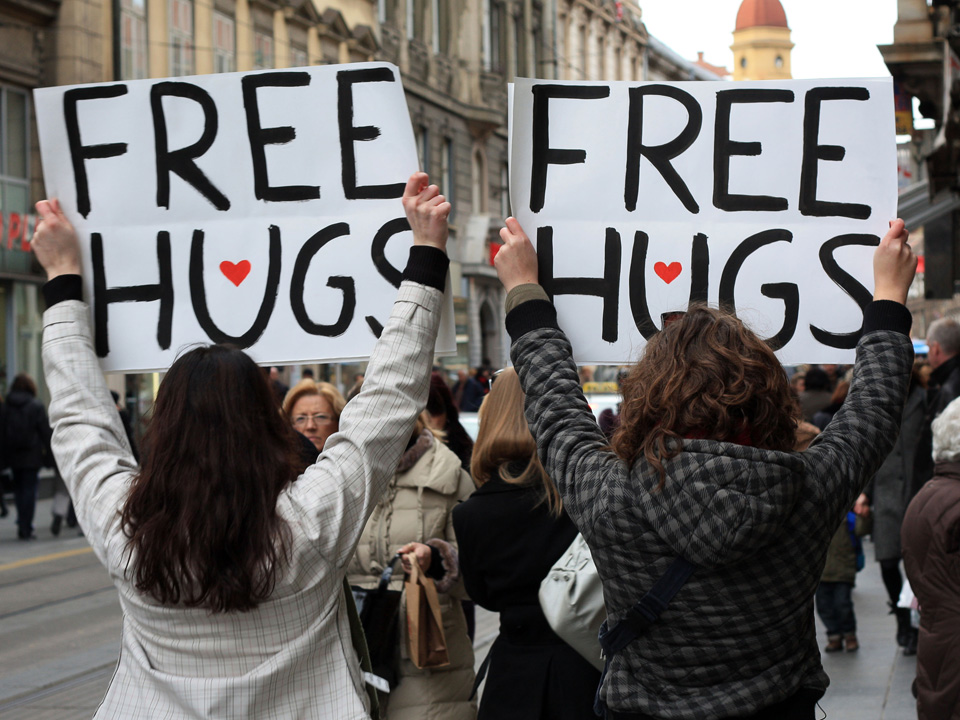
Free hugs

The ‘free hugs’ social movement, which began in Sydney, has spread across the globe. Image credit: still wanderer via Flickr

More than skin deep

Forget your brain or guts; skin is your largest body organ. If you could lay your skin out flat, it would measure about two square metres. In fact, your skin accounts for about 16 per cent of your total body weight. Skin does many important things, like protecting you from infection and keeping all your vital bits on the inside. But skin is also packed with nerves and receptors to connect you to the outside world. Before you ever heard or saw anything, you were feeling your surroundings in the womb: touch is the first sense to develop.

We have long known how important touch is to human and other animal babies. Back in the 1950s, rhesus monkeys denied access to a mother became anxious, withdrawn and depressed. When the infant monkeys were offered two different surrogate mothers, they chose a soft, cloth doll over a wire one that offered food and water. So important is touch, the monkeys chose the comfort of a soft pretend Mum over essential sustenance. Young rats denied grooming by their mothers grow up to be fearful and anxious. Not only that, these rats have weaker immune systems than rats groomed and licked by their mothers.

Human touch

‘Touch therapy’, or massage, has been shown to be vital for premature babies. Premature babies who receive massage for 5 – 10 days gain up to 48% more weight and stay in hospital for 3 – 6 fewer days than premature babies who aren’t massaged.

Hugging, a king among touches, has been shown to lead to a variety of benefits. You are less likely to get sick when exposed to the common cold if you have experienced lots of hugs. Hugging can also lower your heart rate and increase your oxytocin levels: oxytocin is also known as the love hormone.

Interestingly, when we have lost connection with someone, we refer to it as being out of touch, or having lost touch with someone. But there are clear cultural differences in what is considered normal when it comes to interpersonal touch. In a well-known study from the 1960s, a psychologist, Sidney Jourard watched friends chatting with one another in cafes around the world. During a one-hour conversation, friends in Puerto Rico touched each other around 180 times. In Paris, the average was 110 touches, while in London the average was zero.

Touching is trusting

Touch doesn’t have to be as overt as a hug to have an effect. Touching the arm or shoulder of someone for one or two seconds when making a request can strongly influence how that person responds.

For example, a simple touch to someone’s forearm makes it much more likely they will give money to a person on the street. If a waitress or waiter touches the arm of a customer in a restaurant, they get paid a higher tip and students who were gently touched on the back by a teacher in an incidental (and generally unnoticed way) were twice as likely to participate in a class discussion.

It even works in the library: students whose hands were touched for a brief moment when being handed back their library cards said they liked the library more and were more likely to go back. This was true even if the student wasn’t aware the touch had occurred. Similarly, people rate someone trying to sell them a car more highly if the shopper has been touched by the salesperson. And people are more likely to give someone a free cigarette if the request is accompanied by a slight touch.

When scientists carefully watched the behaviour of players in the U.S. National Basketball League, they made an interesting observation. Teams including players who touched each other during a game to offer support (think high fives and fist bumps) performed better even after taking into account a whole lot of other factors.

The language of touch

Research has shown that we are also highly tuned to the unspoken words behind a seemingly simple touch. Participants in several experiments have been able to detect disgust, anger, fear, love, sympathy and gratitude from a one-second touch to their forearm from a stranger they could not see. Just good guesses? The study participants were able to label the right emotion at much better-than-chance levels. With 12 possible emotions to choose from, the chances of simply guessing the right emotion was 8%. But compassion, anger, love, gratitude and fear were all correctly interpreted more than half the time.

One slightly concerning finding from this study was that on the whole, women are good at ‘reading’ women’s emotions from touch and men do well at deciphering the emotions conveyed by the touch of other men. But when it comes to interpreting emotions expressed via touch across the gender divide, let’s just say we’ve got a lot to learn.

Links and stuff


Midnight munchies

comments 4
Health / Medicine / Myths / Psychology

It’s late, you’re exhausted, and you’re craving chips. And pizza. Or any other number of junk foods; a salad just won’t cut it. Most of us have experienced the midnight munchies, but what makes fatty, salty and sweet foods particularly appealing late at night?

Midnight snack

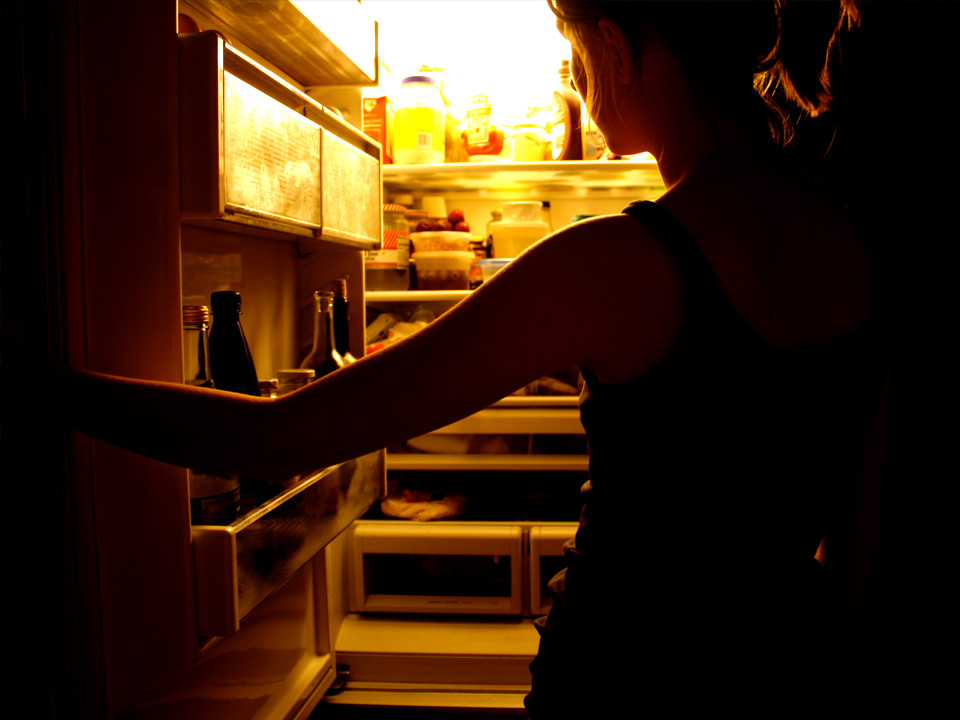
Why do we crave the worst foods in the smallest hours? Image credit: KatiesCameraClicks via Flickr

Late-night cravings

If you often find yourself craving junk food at night, you’re not alone. A couple of years ago, Jawbone, the company behind a well-known fitness tracking device released summary data about the food choices their users were making. You could have easily predicted what they found. For example, people choose milk or yoghurt rather than vegetables for breakfast. Consumption of veggies peaks at dinnertime, but drops dramatically after 8 pm. At the same time, foods high in fats and sugars are strongly preferred between 8 pm and about 4 am.

Which leads to an obvious question. Does being tired (which is likely if you are up in the wee hours) cause people to crave fatty or sugary food? Many studies have shown a link between sleep deprivation and obesity, but that doesn’t tell us whether being short on sleep actually leads us to eat more junk food.

There have been many different explanations for the link between obesity and lack of sleep. For example, we know missing out on sleep disrupts the hormones that control our appetite. There’s also the simple fact that the less time you spend sleeping, the more time you can spend eating. And if you aren’t getting much sleep it’s likely you feel too tired to head to the gym. We also know drinking alcohol, which people are more likely to do at night, leads to eating more. But is there a more direct link between being sleep-deprived and craving fast food?

Off to the sleep lab

Research published this month specifically tested whether a person who is sleep-deprived eats more fatty and sugary snacks than when the same person has had enough sleep. Healthy volunteers aged between 18 and 30 each spent two four-day visits staying at a university lab. During both visits, the volunteers ate identical meals, at 9 am, 2 pm and 7 pm. During one visit, they slept an average of 7.5 hours each night. But during the second stay, they weren’t allowed to stay in bed long and slept on average only 4 hours and 11 minutes per night. On the fourth night of each stay, the volunteers were offered a range of snacks.

When the study volunteers were sleep-deprived, they binged on fatty and sugary snacks (think lollies, chips and ice cream) and ate an average of 300 extra calories. Three hundred calories is way more than needed to compensate for the extra hours of being awake: you only need about 17 extra calories for each additional hour you are up and about. That’s the equivalent of less than half an apple! But those who took part in the study said when they were sleep-deprived, they felt hungrier and found it very hard to resist the high-fat snacks on offer (there were also healthy options available).

Marijuana munchies – without the marijuana

The researchers analysed the volunteers’ blood to see if levels of particular appetite-related hormones could explain the increase in snacking. They also looked at levels of chemicals called endocannabinoids (named after cannabis, the plant that led to their discovery). The endocannabinoid system involves receptors in the body that affect the immune system and the regulation of appetite hormones. And it’s this system that is directly affected by marijuana, explaining the infamous ‘marijuana munchies’.

When sleep-deprived, the volunteers had much higher levels of a particular endocannabinoid called 2-AG that increase the pleasure we get from eating sugary and fatty foods. And the daily rhythm of 2-AG was different: when the volunteers were low on sleep, the chemical remained at high levels in the body until about 9pm, rather than until 2pm, which is normal.

What does all that mean? Simply that when you’re sleep-deprived, you crave fatty and sugary foods, and you get a lot of pleasure from eating them. It doesn’t matter if you’ve just eaten a large dinner a few hours earlier; you’re going to find it very hard to resist pizza, chocolate biscuits and ice cream.

Does it matter if you binge on junk food at night? If you’re trying to lose weight, scoffing biscuits in the wee hours is probably not ideal. But there’s another reason to shut the fridge and go to bed. Research in mice suggests eating at a time you would normally be asleep may eventually lead to difficulties in both learning and in storing long-term memories.

Hmm, where did I put that packet of chips anyway?


Links and stuff


Reading the fine print

comments 5
Health / Medicine / Myths

I remember being told in primary school no one else on the planet had exactly the same fingerprints as me. Pretty powerful stuff for a seven-year old. It was thrilling to press my fingers onto the ink pad and look at the patterns my fingerprints made on paper. Patterns that were uniquely mine and that I’d never really looked at before, despite the fact they had been part of me since before I was born. But is it true? Are each of your fingerprints truly one of a kind?

Fingerprints. Source: iStock

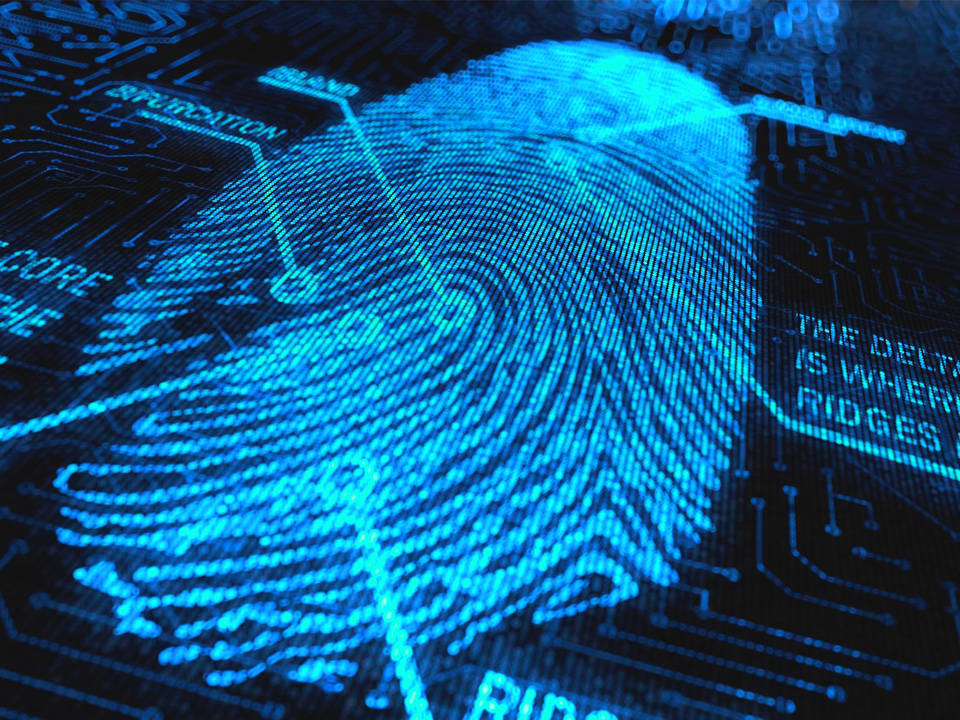
Your fingerprints are formed in the womb, so even identical twins have different sets of prints. Image source: iStock

‘There is no one alive who is Youer than you’

It seems Dr Seuss got it right back in 1959, at least when it comes to fingerprints. In fact as far as we know no two people who have ever lived share an identical set of fingerprints.

Fingerprints, otherwise known as Friction Ridge Skin (FRS), come in three basic patterns: loop, arch and whorl. These describe the overall shape of the tiny ridges you see if you look closely at your fingertips. It’s possible to have just one, or two, or all three patterns of fingerprint across your ten fingers. We’ve known for many decades the overall pattern of your fingerprints is inherited, but there are a number of genes involved so it’s not as simple as saying you’ll definitely have identical patterns to one or both of your parents.

And although your genes play a big role in your fingerprint patterns, that’s not the full story. The exact path of the ridges, as well as the breaks and forks in the ridges, are affected by the conditions you were exposed to before you were born. Your fingerprints are formed during a fascinating process which began about ten weeks after you were conceived. Because these ridge features aren’t a result of genes, even identical twins end up with different fingerprints. Perhaps one twin had a slightly longer umbilical cord than the other, or simply experienced more pressure from the walls of the uterus. There are a variety of factors that can affect the environment a fetus is exposed to, which in turns affects fingerprint formation.

What use are fingerprints anyway?

It’s not just humans who have fingerprints: other primates have them too. It has long been assumed primates evolved fingerprints to provide added friction, which is obviously very useful for handling objects or climbing trees. More evidence for the friction argument comes from the fact animals like koalas, which also move through trees, have fingerprints not terribly different to ours. Great theory.

The only problem is that when scientists tested the friction created by fingerprints, they found the ridges didn’t assist with gripping at all. Others have suggested the ridges on our fingers may assist with drainage and improve grip in wet conditions or may simply improve our sense of touch.

Exactly why we evolved fingerprints is still up for debate, but we do know humans can do fine without them. A handful of people in just five Swiss families have a genetic mutation resulting in them being born without fingerprints. These fingerprint-less people are fine except when trying to cross a border, explaining why this condition has also been dubbed the immigration-delay disease.

At the scene of the crime

As a result of their uniqueness, fingerprints have long been considered a foolproof method of identification. Fingerprints were first used to convict a criminal in Argentina in 1893 and continue to be used as evidence in a high proportion of criminal cases. These days it’s routine to use your fingerprint to unlock your smartphone, a feat achieved simply by authenticating your prints against a stored template.

These uses also assume our fingerprints are fixed, but recent studies have shown in fact our fingerprints change over time. Of course permanent damage like scarring can change a fingerprint but we now know there are other more subtle changes that happen over time.

More drastically, we recently heard the case of a Singaporean man who lost his fingerprints as a result of cancer treatment. It turns out bricklayers also wear down the ridges on their fingers because they spend so much time handling heavy, rough objects.

What your prints say about you

Despite persistent claims your fingerprints reveal your personality, and can be used to predict your ideal job and your destiny, there is no evidence for any of these things. What a shame! Just last week it was announced three-thousand-year-old fingerprints have been found on the lid of an Egyptian coffin. Imagine if those prints could tell us something of the life of the craftsmen they belonged to.

Links and stuff

Colour me calm?

comments 10
Health / Myths / Psychology

Are you into colouring books? If you are, you’re not alone. Right now, and in fact for all of 2015, a quarter of the best-selling books on Amazon were colouring books. Adult colouring books. It’s an international craze that doesn’t show any sign of slowing. But is there any evidence for their touted health benefits? Will you be any calmer, less anxious or more focused if you spend time colouring-in?

Is there any science behind best-selling colouring books for adults?

Is there any science behind best-selling colouring books for adults?

Staying within the lines

Can you remember entering colouring competitions when you were a kid? I can. I went to great lengths to stay inside the lines and choose my colour combinations carefully. But the stakes were pretty low. After all, someone else had already done the hard work and drawn the picture for me. All I had to do was colour it in.

Which is one of the main arguments as to why so many of us have embraced the colouring-in phenomenon as adults. Colouring is creativity without any pressure. You don’t have to start with a daunting blank piece of paper, yet you end up with a pleasing piece of artwork. It’s like ‘art with training wheels’. It’s challenging enough that it’s not boring but few people would claim colouring in is difficult.

Art for health

We’ve long known art therapy works. Creating art helps those trying to come to terms with a cancer diagnosis, and alleviates distress during cancer treatment. Art has also been shown to help sufferers of dementia express themselves and was already being used 30 years ago to treat post-traumatic stress disorder in Vietnam Veterans.

Art therapists are quick to point out colouring in isn’t the same as specialised art therapy but that doesn’t mean colouring can’t be therapeutic. There may be good reasons why colouring has become the latest golden child of the mindfulness movement.

Dr Stan Rodski, a neuropsychologist and neuroscientist (who also happens to have a range of adult colouring books on the market), says colouring changes our brain waves. According to Dr Rodski, there are three key characteristics of colouring contributing to its therapeutic effects: repetition, pattern and detail.

In the process of looking at the size and shape of the area to colour, examining the edges of the space and picking a colour to use, your brain is occupied. In particular, the part of your brain, which might otherwise be involved in you feeling anxious or stressed, is focused on something entirely different. The parts of the brain that might otherwise be contributing to you feeling bad are preoccupied with colour, shape and pattern.

One study compared people colouring squares, mandalas or colouring on a blank piece of paper after they were made to feel anxious. Those colouring free-form experienced no relief from anxiety whereas both groups who were provided with outlines to colour were significantly less anxious after spending 20 minutes colouring their designs.

At the end of the day, colouring is a calm, repetitive and extremely focused way to spend your time. It doesn’t seem too big a stretch to suggest colouring is essentially a form of meditation. And herein lies the main argument as to why colouring is so therapeutic.

Colouring as meditation

Scientific evidence for the benefits of meditation is mounting all the time. In one study, the brains of people who spent an average of 27 minutes per day practicing mindfulness exercises changed. Compared with non-meditators over the same period, meditators had increases in the brain’s grey matter (a part of the nervous system associated with processing information) in the hippocampus, which plays an important role in learning and memory. There were also changes in structures associated with our ability to be self-aware and compassionate. Grey matter also changed in the amygdala, a part of the brain involved with managing stress and anxiety.

A review of many of the studies looking at how our brains change in response to meditation found consistent changes in the brains of meditators in areas associated with memory, emotion and self-regulation, body awareness, pain tolerance and complex thinking. Meditation has also been shown to increase our capacity for paying attention and for feeling empathy.

Colouring can serve as a mindfulness activity for those of us who struggle to meditate regularly and even if colouring only provides some of the benefits of an established meditation practice, there is still a lot to be gained.

To knit or to colour

You may be thinking ‘Yes, but my meditation is knitting / crocheting / cross-stitching.’ And that may well be true. What then explains the extraordinary popularity of colouring books for adults? Most likely the fact colouring can be done anywhere, anytime, very cheaply, and many people say they feel the benefits immediately. You don’t need to learn how to cast-on or cast-off stitches and there is less pressure to produce a creative masterpiece.

Which probably explains why some of Australia’s biggest companies have started providing their staff with colouring books and pencils. There have also been suggestions that every doctor’s waiting room in the country should be equipped with colouring materials. I, for one, would rather colour than look at the latest women’s magazines.

Links and stuff

The look of a liar

comments 2
Evolution / Myths / Psychology

The other day my seven-year-old told me a blatant lie. He wasn’t trying to hide the lie but instead immediately asked ‘did you notice the twinkle in my eye?’ Somewhere along the way he’d heard that twinkling eyes are a good indication of lying and he wanted to test me out. We’re all aware of certain gestures that are meant to clearly give away dishonesty. But it turns out although we may hear dozens of lies every day, we are incredibly bad at picking them.

How can you tell if someone is lying? Image credit Janwillemsen via Flickr and Antonio Lupatelli.

How can you tell if someone is lying? Image credit Janwillemsen via Flickr and Antonio Lupatelli.

Despite what you may like to think, we all lie. Those who swear they never lie probably do so more than the average. In the course of 10 minutes of conversation between two people who have just met, there will usually be two or three (and up to 12) lies. Think “it’s lovely to meet you”,…”your line of work sounds fascinating”,….. “I have to dash – I’m running late for an appointment.” Interestingly, men and women are equally likely to lie but men are more likely to lie to make themselves look better whereas women more often lie to make someone else feel better.

Can you spot a liar?

Contrary to what you may think, chances are you’re not great at picking a lie. In fact, after decades of research, Paul Eckman says we can only detect lies on average 52% of the time. We might as well flip a coin. In one of the most famous studies, police, judges and even members of the FBI performed no better than untrained members of the public when picking lies. Why do we get it so wrong? Because we’ve taken on board the wrong information about reliable indicators of lying.

A worldwide study found that 72% of people thought avoiding eye contact was the strongest sign of lying. Invariably people say: ‘a liar can’t look you in the eye’. But it’s not true. In normal conversation people usually make direct eye contact only 30 – 60% of the time and if anything, a person who is lying will make direct eye contact more of the time.

Are liars stressed?

The problem is that we think we’re looking for signs of stress. We assume someone who is lying is worried about getting caught. But many people are so confident at lying they have no fear of the lie being discovered. Other are simply extremely good at hiding nerves. Still others are also lying to themselves and show no signs of deliberate deception.

Instead of looking for signs of nervousness or stress, we actually should be looking for signs that someone is thinking hard. Fabricating lies and getting a new story straight takes extra brainpower. Particularly because the new story can’t contradict anything the listener could already know. While you may blink more often when you’re nervous, you probably blink less often when you’re thinking hard. Similarly, you probably fidget less when you are deeply concentrating.

All of a sudden it becomes obvious why we have tended to focus on the wrong signs. We aren’t looking for someone who fidgets in their seat, avoids eye contact or touches their face. Are there any red flags that might reliably alert us to a lie? There’s nothing foolproof, but pay close attention to the words a person uses and their tiny, fleeting facial expressions.

Lying words

Liars tend to take longer to answer questions unless they’ve had time to plan their answers in which case they will start talking more quickly than someone telling the truth. And liars tend to say less overall: they provide fewer details than someone who is telling the truth does. Presumably because the less a person says, the less likely they are to mess up their own story. Liars also often repeat words – perhaps as a way of trying to sound more definite about the event they are describing. At the same time someone who is lying tends to speak more quietly the more they explain something.

People also tend to change the phrases and words they use when lying. For example, someone who is lying refers to themselves less, using words like I, me and my less often. This functions as way to distance themselves from their story. They also use more negative words like hate and sad, probably because at some level the liar feels guilty about it. Interestingly someone who is lying is also less likely to use the words except and but. It’s as though someone who is lying has more difficulty distinguishing between what they did or didn’t do.

Using these characteristics, there is now a computer program that can detect lies in a piece of writing with 67% accuracy- a substantial improvement on our 52%.

A lying face

Paul Eckman’s research has shown that probably the most reliable way to improve your ability to pick a lie is to learn to read facial and body microexpressions. These are movements that last only about one-twentieth of a second and are almost impossible to consciously control. They happen when someone conceals a feeling, either deliberately or unconsciously.

A very fast wrinkling of the brow, a quick pursing of the lips or even a very tiny shrug are all strong suggestions of lying to someone who knows what they’re looking for.

Can’t picture what I mean? Watch Bill Clinton’s famous I did not have sexual relations with that woman speech after a short lesson from Paul Eckman and you’ll be right onto it.

Not that anyone thought for a moment Clinton was telling the truth anyway.

Links and Stuff

Radio on demand

This post accompanies a radio segment on Triple R’s Breakfasters program on Wednesday 8 July 2015.

Lacking total recall

comments 4
Biology / Health / Medicine / Myths / Psychology

What’s your earliest memory? Chances are you can’t remember anything before the age of three. Otherwise known as childhood amnesia, it affects us all but isn’t quite the stuff of Hollywood. In the movies, the plot usually revolves around someone being bopped on the head and suddenly having no idea who they are or what they are supposed to be doing. And more often than not, a second whack to the head and the person’s memories return, good as new. But is that an accurate depiction of amnesia?

I can’t remember anything that happened before two weeks ago… I don’t know who I am, I don’t know where I’m going, none of it. Matt Damon as Jason Bourne

Whether the Bourne Identity, Memento, 50 First Dates or Hitchcock’s Spellbound, there are plenty of movies that depict extreme cases of amnesia. In real life, cases like these aren’t nearly as common or black-and-white as Hollywood might have us believe. But there are a variety of real types of amnesia, some more common than others.

What do Jason Bourne, Dory and 'forgetful' Lucy Whitmore have in common? Amnesia.

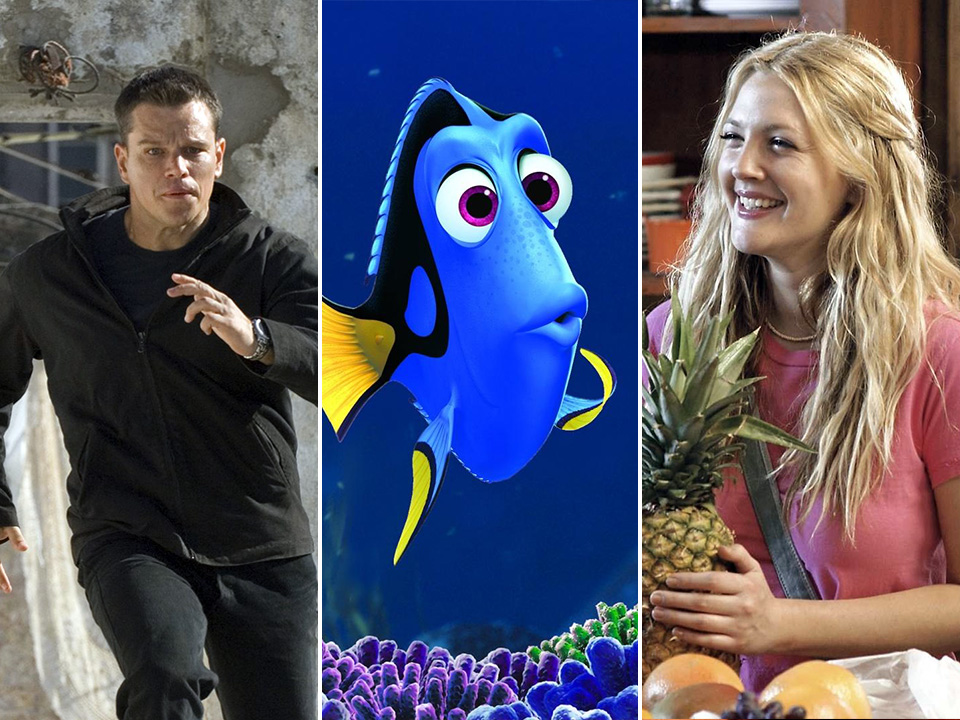
What do Jason Bourne, Dory and ‘forgetful’ Lucy Whitmore have in common? Amnesia.

Childhood amnesia

Few people can remember anything from their childhoods earlier than age three. Despite some people claiming otherwise, research suggests that people aren’t able to remember their own births.

Why can’t we remember specific events from early in our lives? We certainly don’t forget skills like walking, talking and riding a bike we learn during those first few years. Sigmund Freud suggested we suppress these early memories because they were sexual and traumatic.

A more recent theory suggests childhood amnesia is a result of lack of language. It turns out that if children don’t have the necessary vocabulary to describe an event when it happens, they aren’t able to describe it later, even after learning the necessary words.

New research suggests that we forget our early years because of the fact so many new brain cells are being formed in the hippocampus, which is an important brain structure involved in memory formation. Essentially, the new brain nerve cells disrupt the circuits (and memories) that have already been formed in our brains.

Who are you?

Retrograde amnesia is when all memories formed before a particular event – like a brain injury – are lost. Scientists have been fascinated by this kind of amnesia for more than 120 years and have studied many patients affected by it.

In one case, a woman, known as G.H. woke up after surgery performed in August 2002. She was convinced it was May 1989 and was unable to recognise her own children. G. H. couldn’t remember anything about her previous life after May 1989.

Excitingly, research published earlier this year showed that the lost memories may in fact still be intact in the brain, but access to the memories has become blocked because of disease or trauma. The researchers found particular cells called Engram cells retained the memories and the memories could be recalled by shining a light on the cells. I should point out that unlike in the movies, there is no evidence that a second ‘hit’ to the brain brings back the lost memories.

Just keep swimming

Remember Dory in the movie Finding Nemo? And Leonard Shelby (Guy Pearce) in Memento? These are two of the more accurate movie portrayals of amnesia, in both cases, anterograde amnesia.

People suffering anterograde amnesia retain their identity and memories of their lives before a particular event (like a head injury) but completely lose the ability to form new memories. In Memento, Shelby is shown tattooing facts about his wife’s murder onto his body as the only way to be able to hold onto them.

We understand stacks about this type of amnesia because of a famous patient known as Henry M. Henry’s amnesia was the result of brain surgery performed to try to reduce his epileptic seizures. The surgery removed a number of areas of his brain tissue and left him with no memories of anything that happened to him after the surgery and the inability to retain any new information for more than a few minutes. Henry M’s amnesia has been studied extensively and is fascinating to read about.

Play it again, Sam

And then there are many more complex and fascinating examples of amnesia.

For example, there was a professional cellist who developed severe amnesia after suffering a viral infection of the brain. He was unable to recall any events from his past life, or remember any of his friends or family. He also had difficulty forming new memories. But he could still remember and play every piece of music he had ever learned, sight-read new music and learn new music he had never heard before.

And there was even one documented case of amnesia just like in the 2004 film 50 First Dates. As a result of a car accident in 2005, a patient known as F.L. wasn’t able to retain memories from one day to the next. During any one day her memory was normal but her memory of each day disappeared during a night of sleep. But in a fascinating twist, subsequent research suggested her own experience of amnesia may have been unconsciously influenced by her knowledge of how amnesia had been depicted in the movie. When she didn’t realise she was being tested on something she had learned prior to that day, her memory was quite good. Drew Barrymore happened to be her favourite actress and with time and treatment, her amnesia improved.

Now if that’s not life imitating ‘art’, I don’t know what is.

Links and stuff

Radio on demand

This post accompanies a radio segment on Triple R’s Breakfasters program on Wednesday 1 July 2015.

The look of concen­tration

comments 4
Evolution / Health / Myths

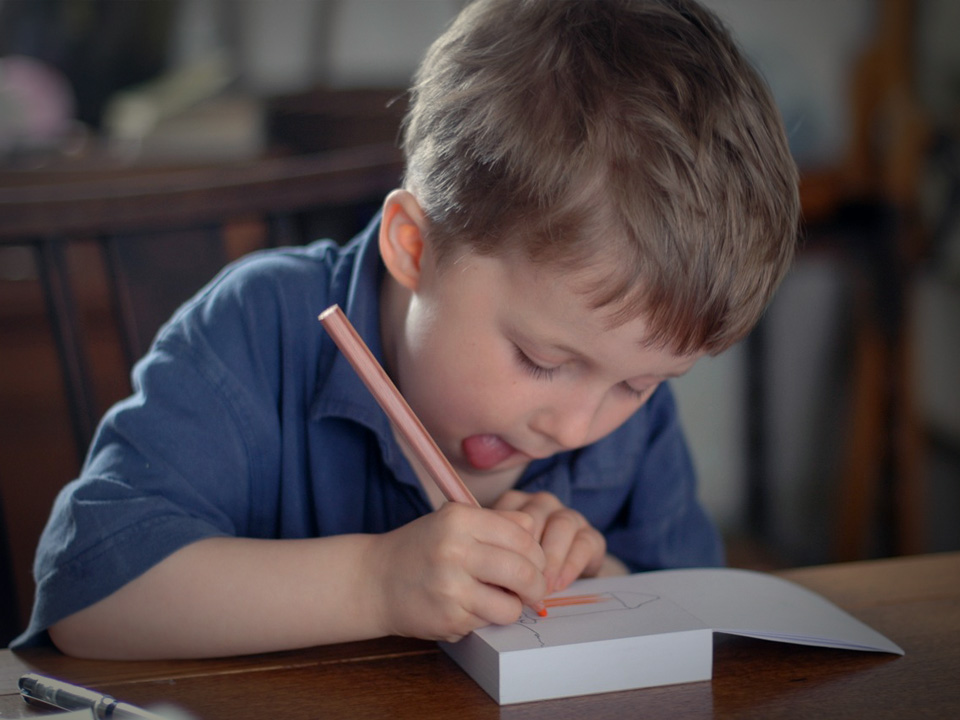
Most young kids do it. Michael Jordan was famous for it. And it’s quite possible you do it too. What am I talking about? Sticking your tongue out when you concentrate. It’s incredibly common and over the years there have been a variety of theories attempting to explain the habit. Recent research supports the suggestion it’s connected to the way humans evolved spoken language.

Do you know someone who pokes their tongue out when they're concentrating? Image credit henry... via Flickr

Do you know someone who pokes their tongue out when they’re concentrating? Image credit henry… via Flickr

A quirky tongue?

Next time you have the opportunity, watch a young child who is concentrating hard on doing something with their hands. Chances are you’ll notice their tongue poking out from their mouth. Is it simply a childhood quirk, or could there be more to the humble poking tongue?

Think back to the last time you did something with your hands that required a lot of dexterity. Something like threading a needle or sinking the perfect shot while playing pool. It’s highly likely your tongue was pressed between your lips, perhaps with the tip peeking out. Your tongue is one of the largest groups of muscles in your body and there’s good reason to think our tendency to poke it out when concentrating is more than just a quirk.

Don’t interrupt me!

Research published back in 1974 looked at ‘tongue-show behaviour’ in young children, adults living in a variety of countries and young gorillas. The researchers concluded humans (and other primates) show our tongues to communicate we don’t want to interact with anyone. During the 1980s, a number of researchers explored the idea a tongue poking out works as an effective signal to say “don’t disturb me”.

In one study, 50 university students each took an individual reading comprehension test. The lecturer sat at the front of the room, but wore headphones needed to complete other work. Each student was put in a position in which they had to interrupt the lecturer: one page of the test was clearly missing. Because of the headphones, a student had to either call loudly or tap the lecturer on the arm to get attention.

If the lecturer appeared to be concentrating and had their tongue poking out, it took students on average nearly 20 seconds to interrupt and ask for the extra page. If the lecturer at the front had the same facial expression – but without a visible tongue – students waited on average only seven seconds before interrupting. Interestingly when asked later, none of the students who had seen the tongue were aware it had been part of the lecturer’s facial expression. An extension of this experiment found the same thing: the visible tongue is the important feature. People are much less likely to interrupt you if your tongue is poking out than if you simply look to be concentrating intensely.

Desmond Morris pointed out babies also signal they have had enough to eat by poking their tongue out. Another way of saying ‘leave me alone’. But just because a poking-out tongue functions as a ‘don’t interrupt’ signal, that doesn’t necessarily explain why we do it.

Overloaded

Stop for a moment and become aware of the incredible sensitivity of your tongue. It isn’t just responsible for tasting things but provides you with a detailed and constantly-updated mental map of the inside of your mouth. Your tongue is highly sensitive because it has a big supply of nerves.

You may also find that as you think, your tongue moves to partly form the shape of a word you are thinking. All of this means your tongue is sending lots of information to your brain all the time. So one explanation for why you might do it is that in order to reduce some of this sensory input, you stick your tongue outside of your mouth and hold it still. As a result, you are left with more brainpower to concentrate on a demanding task.

It’s all about language

We know there are strong links between the brain regions responsible for speaking and the control of hands and arms. And many scientists have suggested human speech may have evolved from communication by hand gestures.

In a study published earlier this year, right-handed 4-year-olds were filmed while completing tasks requiring either very fine hand control (opening a padlock with a key), less fine control (playing a game that involved knocking or tapping the table) or no hand control at all (remembering a story). The researchers watched each video for any sign of the kid’s tongue poking out.

All of the children stuck their tongues out while performing the tasks, but more often during some tasks than others. Although we might expect something as challenging as opening the padlock to lead to the most tongue-showing, that’s not what the researchers found. Instead, it was the knock and tap game that resulted in the kids sticking out their tongues most often.

The researchers explain it by the fact the game involved strict rules, rapid turn-taking and the use of defined hand gestures. All of which are the basic and early components of language. To back this up, the researchers noticed that the tongue most often poked out on the right side of the body. That suggests the tongue movement is being controlled by the left side of the body, which is where language centres are usually found in right-handed people, particularly amongst children.

If kids can’t help but stick their tongues out when engaging the language centres of their brains, why don’t more adults do the same? Probably because adults are embarrassed and have trained themselves not to do it.

So next time you see someone’s tongue sticking out as they concentrate, smile by all means and take it as a sign to leave them in peace. But also step back and admire a sign that the complex language we all depend on may well have evolved from simple hand gestures.


Links and stuff


Radio on demand

This post accompanies a radio segment on Triple R’s Breakfasters program on Wednesday 24 June 2015.

The sound of music

comments 6
Myths / Psychology

Today I saw something I’ve never seen before: a man breaking out into dance in the supermarket. He wasn’t having a boogie to draw attention to himself. In fact, I got the impression he would have been embarrassed if he’d seen I’d noticed. I think he just couldn’t help himself. Michael Jackson’s The Way You Make Me Feel came on in the shop and he couldn’t resist the beat. One aisle over, I caught another shopper smiling and humming along. I don’t normally notice the music being played in shops, but I also felt more energised than I had moments earlier. Whether it be how long you spend in a shop, the amount you spend, even whether you buy French or German wine, music has power over our behaviour. And shops are using it to their advantage.

Even if you don't notice, the soundtrack playing in the supermarket could be having a profound effect on your purchases. Image credit: Caden Crawford via Flickr

Even if you don’t notice, the soundtrack playing in the supermarket could be having a profound effect on your purchases. Image credit: Caden Crawford via Flickr

Do you like your music fast or slow?

I’ve written before about the power of colour in influencing our behaviour and decisions. The colour green, even when only subtly included in packaging, leads us to perceive a product as healthy. This tendency isn’t altogether surprising given the way the colour green has been used to market health and environmentally-friendly products.

But the effect of music on our shopping decisions seems to be less predictable. Did the man enjoying vintage Michael Jackson spend more or less time shopping than he would have otherwise? Did he spend more or less money? Was he more inclined to make impulse purchases as a result of feeling upbeat?

The first thing to say is lots of studies have shown that we generally tend to stay longer in shops and spend more if music is playing.

We know that the more people like the music being played in a café, the more they tend to like the café itself, and the more likely they are to say they want to return to it.

And back in 1982, research showed fast music being played in a New York supermarket resulted in shoppers moving around more quickly, and spending less money than in the same supermarket when slower music was played.

Similarly, when slow music was played in a restaurant, diners stayed in the restaurant significantly longer and spent significantly more money on both food and drink than when faster music was played.

Loud or soft?

As early as 1966, research showed shoppers spent significantly less time in a supermarket when music was played loudly than when the same music was played softly.

Since then, a variety of studies have shown we are less likely to spend time in a shop that is playing loud music, especially if that music is unfamiliar to us, or is simply music we don’t like. Loud music also results in less impulse buying among people shopping with a specific purchase in mind.

An interesting exception is 18–25 year old women shopping for clothes. For these women, louder music resulted in more enjoyment and satisfaction, longer periods of time spent shopping and more spending.

Classical or Top 40?

As well as musical tempo and volume, of course there’s the choice of what sort of music to play. Researchers experimented with the effects of playing either classical or ‘Top-40’ music in a wine cellar. The results were clear: classical music led shoppers to choose more expensive bottles of wine. They didn’t buy more bottles of wine in total, but the ‘classier’ the music, the ‘classier’ the wine chosen!

The result was the same in a restaurant — diners spent more on starters, coffee and on a meal overall when classical music, rather than pop music was playing during their meal.

French or German?

Imagine going into a supermarket with the intention of buying wine. You don’t have any particular bottle in mind and peruse the shelves. You come across both German and French wine (labeled with the appropriate flag), matched for price and dryness/sweetness.

Even if you have no general preference for wine from either of these countries, what could make you significantly more likely to buy one or the other? You guessed it, music. When French accordion music was played, shoppers were much more likely to choose French wine. When German beer cellar music was on in the background, the German wines were far more likely to end up in people’s trolleys.

Interestingly, only 13% of wine shoppers answered yes to the question “Did the type of music playing influence your choice of wine?”

So next time you’re shopping, tune in for a moment on the music being played and think about how it makes you feel. Take control of your shopping behaviour rather than being manipulated by the sounds around you.

And if you feel like busting a few moves, I say why not?

Links and stuff

Radio on demand

This post accompanies a radio segment on Triple R’s Breakfasters program on Wednesday 17 June 2015.