Jet lagged? There’s an app for that

comments 14
Health / Mathematics

You’ve just flown halfway across the globe, and the clock tells you it’s morning but your body tells you it’s bedtime. You’re tired and dazed. You can’t think straight and it takes days to feel normal again. Jet lag. Is it just an annoyance, or a serious health threat? And among the many touted remedies, could a new smartphone app be the answer?

Jetlagged?

It seems like there’s a smartphone app for just about everything… even jet lag! Image credit: Contando Estrelas via Flickr

My guess is that if you’ve ever flown across multiple time zones, you’re familiar with the effects of jet lag. More than just tiredness, jet lag can make you feel like you’ve been hit by a truck. Disoriented, confused and without any appetite or ability to engage in conversation.

Jet lag happens when your master body clock (located in the hypothalamus of the brain) is disrupted and ends up out of sync with your new location. It only happens when you cross multiple time zones, so travelling north-south isn’t a problem. And most people find jet lag is worse when they travel eastwards rather than westwards because of the difference between losing and gaining hours in the day.

How jet lag works

Your internal body clock drives your circadian rhythms, including everything from your body temperature and periods of alertness to your blood pressure and appetite.

Your body clock is largely under the control of light – there are special cells in your retina that tell your brain what time it is. And being exposed to bright light at different times can make your body clock speed up or slow down.

The reason light has such a strong effect is because of the hormone melatonin (produced by the pineal gland near the centre of the brain). Levels of melatonin vary according to a 24-hour cycle. Your melatonin levels start to go up about two hours before you go to sleep, helping you to feel drowsy. So being exposed to daylight when your body clock thinks it’s night leaves your body completely out of whack.

Just annoying, or more serious?

Repeated disturbances to body clock rhythms (think frequent flyers and shift workers) has been linked to diabetes, heart disease and depression. But even infrequent flyers may face problems.

Scientists have shown that jet lag can have serious long-term effects on both our brains and waist-lines.

Research on hamsters that were subjected to six-hour time shifts showed that even a month after returning to their normal day-night schedule, the animals still had serious memory and learning problems. Hamsters were used for the study because they have very clear natural body rhythms.

In another study, airline cabin workers who experienced frequent disruptions to their body clocks with little rest between flights had smaller temporal lobe structures in their brains. That’s right, part of their brains had shrunk – one of the parts of the brain involved in storing and retrieving memories.

Your gut microbes also have rhythms that are in sync with your body clock. Research out last month showed that when your body clock gets out of sync, the composition of your gut bacteria is disrupted, leading to gut problems and potentially even obesity in frequent flyers.

What’s the fix?

There are many different remedies for jet lag, some more effective than others. We’ve all heard that we should drink lots of water and no alcohol on the plane and stay awake until nighttime at our destination.

Other people get a doctor’s prescription for melatonin tablets, which can be used to help shift the body clock. But many people want to be able to minimise jetlag without taking drugs.

There is no silver bullet – so far – to treat jet lag. Horacio de la Iglesia, Professor of Biology at the University of Washington

The best way to avoid or minimise jet lag drug-free is to change your internal schedule to suit the time zone you have just travelled to. How do you do that? Simply plan extremely carefully when you spend time in daylight and when you should hole up in a dark room. You can even begin to pre-adjust to your new time zone before you leave home. Sound complicated?

Enter Entrain

These days there seems to be an app for everything and jet lag is no different. Mathematicians from the University of Michigan have developed a free iPhone app called Entrain.  It uses mathematical equations to model your body clock and create a custom light/dark schedule so you can adjust your internal clock to the new time zone as quickly as possible.

By answering some questions about when you usually fall asleep and wake up and in which time zone you normally live, Entrain calculates what time your body thinks it is right now. You then input the new time zone and information about the brightness of the lighting you will be exposed to. The brighter the light you can expose yourself to at the right times, the faster you will adjust!

In addition to the schedule you need to follow, the app tells you the time it will take “to Entrain” to your new time zone. By following the maths, you can fully sync to a 12-hour shift in time zone in only four days (and you should be sleeping well after only two days).

Whoever said maths isn’t relevant to daily life?

Links and stuff

The rainbow deception

comments 4
Myths / Psychology

Will wearing red help you pick up? Do sports teams dressed in black play more aggressively? Are good guys in movies often dressed in white? Yes, yes and yes. We all have instinctive responses to colours and in the case of food packaging, marketers are very keen to exploit them.

Want to be more attractive?

In a variety of animals, red symbolises attraction. For example, many female primates display red colouration on their faces or private parts to signal to males they are fertile and ready to mate. It’s not so different among humans. Men sit closer to women wearing red and ask more intimate questions of them. And men perceive women dressed in red as both sexually receptive and attractive. Male diners even give bigger tips to waitresses wearing red rather than white. And women aren’t immune to the allure of red. Show women headshots of men and tell them you’re interested in their first impression of the person (don’t mention colour or gender). Show half of the women the man against a red background and the other half, the same picture but against a white background. Women rank a man shown against red consistently more attractive than the same man against white. A man seen with red will also be rated as high in social status and with a higher potential for success. The same was true for men wearing red, rather than white clothing. The research is clear: at a sub-conscious level, red acts as a sexual attraction booster for both sexes.

The power of colour

Colour can have huge effects on our perceptions, and the associations we have with different colours have been the focus of much research. It goes far beyond just ‘red is sexy’. We also know that wearing red enhances performance in a variety of sports. And when you see red, your physical reactions become both faster and stronger. Professional ice hockey players are more aggressive when wearing black, rather than white uniforms. We assume that people dressed in white are likely to be good, whereas those dressed in black are bad. Star Wars, anyone? When you see the colour pink, your muscles relax. In the 1970s, Alexander Schauss, a biosocial researcher, even argued that painting prison cells pink would reduce aggressive and violent incidents. The opponents’ change room at the University of Iowa has been painted pink since 1979. This fact has been used to explain the home team’s success on the football field.

Show me the money

Colour is serious business to marketers. Research shows that visual appearance is overwhelmingly important to consumers choosing what to buy, and up to 90% of a person’s impression of what an object looks like is based on colour. So it’s not surprising that packaging designers are absolute experts when it comes to colour associations. These days, the colour green has become synonymous with natural, healthy and good. You can find it adorning packaging for everything from beer to sugary yogurt, but it’s also the predominant colour used in organic food packaging. In 2000, Heinz carried out a marketing experiment and created a green-packaged tomato sauce, which was incredibly lucrative (but no less sugar-laden).

Healthy Coke? You’ve got to be kidding

You can be confident there is some science behind this green effect when multinational giants Coca-Cola and Pepsi get on the bandwagon. The brand new Coca-Cola Life, sweetened with stevia leaf extract as well as cane sugar and Pepsi True, also sweetened with stevia have remarkably similar packaging. There’s a lot of green! But of course these drinks are not in any way a healthy food choice.

If it's green it must ge good for you... right? Image credit: Gerald Stolk via Flickr

If it’s green it must be good for you… right? Image credit: Gerald Stolk via Flickr

And the green message can be much more subtle. Researchers asked volunteers to imagine they were standing in a supermarket queue, feeling hungry and had chocolate bars in front of them. The people were then shown an image of a chocolate bar with either a green or red nutrition label. They were otherwise identical; in both cases, the label stated that the chocolate bar contained 260 calories. You can guess the result: people thought the bar with the green label was healthier. Next the researchers showed people pictures of identical chocolate bars but with either a white or green calorie label. Again, green signaled healthy. And the more that healthy eating habits mattered to the study volunteer, the more he or she believed the bar with the green label was the healthier option. We may think we’re too smart to be fooled by simple marketing tricks, but this study suggests otherwise. Colour is a force to be reckoned with.

Links and Stuff

One-way ticket to the red planet

comments 2
Astronomy / Psychology

2024: the first human crew of four will set out on their 7-month one-way trip to Mars. They will establish a human outpost on this inhospitable planet and be joined by four new people every two years. This is the mission of Mars One. But are we really sure Earth-based technology can keep them alive?

Could we really live on Mars? And would it be worth it? Image credit: NASA

Could we really live on Mars? And would it be worth it? Image credit: NASA

Martian invasion

On October 30, 1938 The War of the Worlds radio drama was broadcast from New York City. The majority of the radio play ran as a series of simulated news bulletins. As a result, thousands of people believed they were under genuine attack by Martians and mass panic ensued. As ridiculous as that now sounds, fear of invasion from Mars has long been a feature of human culture.

Now for the first time there’s a real plan to send humans to Mars, and soon. Not only that, but these astronauts will embark on a one-way trip. The intention is to establish a permanent human settlement on Mars. Mars One is the brainchild of engineer and entrepreneur Bars Lansdorp, who argues we already know how to pull this off.

While complex, the Mars One Mission is feasible. The science and technology required to place humans on Mars exists today. Mars One website

Will people cope?

The Russian Mars 500 mission gives us some insights into how people deal with all of the challenges involved. Six volunteers were confined for 520 days in a mock spacecraft designed to simulate a trip to Mars. The simulation provided some useful information, for example, that it was impossible to predict which of the volunteers would suffer insomnia and depression. But everyone agrees it is essentially impossible to know what life would be like on Mars while still on Earth.

If you read the Mars One website, it is tempting to believe this mission is well within our grasp and, from a technical point of view, its success is virtually guaranteed. It also helps that the people involved want to settle on Mars, and understand there will be no possibility of them returning to Earth, regardless of what happens.

But Mars will be a tough place to live. Mars sits between Earth and Jupiter and has a temperature range of –140 to 30 °C. It is essentially a desert, about the size of all of Earth’s land surfaces combined. Of most concern is the fact there’s no free-flowing water and Mars’ atmosphere is 96% carbon dioxide. The astronauts won’t be able to leave their habitable settlement without wearing their Mars suits. NASA calls Mars the ultimate lonely planet destination.

Interplanetary Big Brother

How do you fund a mission as expensive as this? Through reality TV of course. The creators of Big Brother are on board to raise the $6 billion in funding required to get this mission off the ground.

The call for applicants went out last year. The criteria: astronauts must be creative, intelligent, physically healthy and psychologically stable. A number of other characteristics were part of the selection process, including a standing height of between 157 and 190 cm. The most important criteria? A ‘grounded, deep sense of purpose’.

It seems plenty of people are willing to abandon Earth in search of a ‘better’ future. 200,000 people applied (watch their application videos here) and the first cut whittled down the hopeful astronauts to 1000. As of May this year, 705 willing Mars settlers remain. Twenty-four people will eventually be chosen, with the selection process to be broadcast internationally.

The lucky final group will become full-time paid members of the astronaut training program, taking part in technical, personal and group training. They will spend several months of each year training in the Arctic Desert. The focus is partly psychological — learning to deal with prolonged periods in a remote location with few companions. But there’s also the technical side — for example, learning to operate and fix machinery, gaining medical and dental knowledge and learning to grow all the food needed for survival.

Not so fast…

But amongst a number of other concerns, last month Massachusetts Institute of Technology (MIT) students published a detailed analysis of the Mars One mission and argued that the colonists are doomed to starvation. Specifically, computer simulations of the proposed Mars One crop system showed the growing set-up would produce too much oxygen, and the astronauts would be poisoned within 68 days of arriving on the red planet.

Although Lansdorp claims we have the technology for removing oxygen and scavenging water, the MIT team criticise the assumption that these technologies will actually work on Mars. Of course, they have never been tested anywhere but Earth.

The MIT team argues that another serious problem will be a lack of replacement parts for all the equipment that will be needed to sustain human life on Mars. There won’t be a lot of spare space in any of the vessels headed to Mars.

Lansdorp’s response to the many doubts? That there is still plenty of time to iron out potential problems.

Regardless of whether this extraterrestrial mission has a chance of succeeding, I can’t help but think of what $6 billion could do here on Earth…

Links and stuff


Groove is in the hive

comments 2
Biology / Ecology / Zoology

Let’s talk about waggles, not Wiggles. Honeybees have long been famous for their intricate ‘waggle dances’, a series of moves telling other bees where to find food. And scientists have become incredibly good at eavesdropping on their complex conversations. But how do animals with such tiny brains communicate in so much detail?

Working 9 to 5

Imagine you’re a worker honeybee. That means you’re female but you don’t get to reproduce. You live in a hive of 60,000 other bees and you’ll only live to the ripe old age of about six weeks.

During that time you’ll have a variety of different tasks to do. In the early days you’ll be responsible for cleaning the hive, looking after the queen (the only female who gets to reproduce) and repairing and building new wax honeycombs.

Later in life it will be your job to leave the hive to search for pollen and nectar. Nectar is what becomes honey after some nifty processing by the bees.

When you hit the jackpot — flowers offering lots of tasty nectar – you need to return to the hive and share the goss.

Without much of a brain, giving exact directions would seem like a tricky task. But even Aristotle knew that bees are clearly able to do just that, by of all things, dancing.

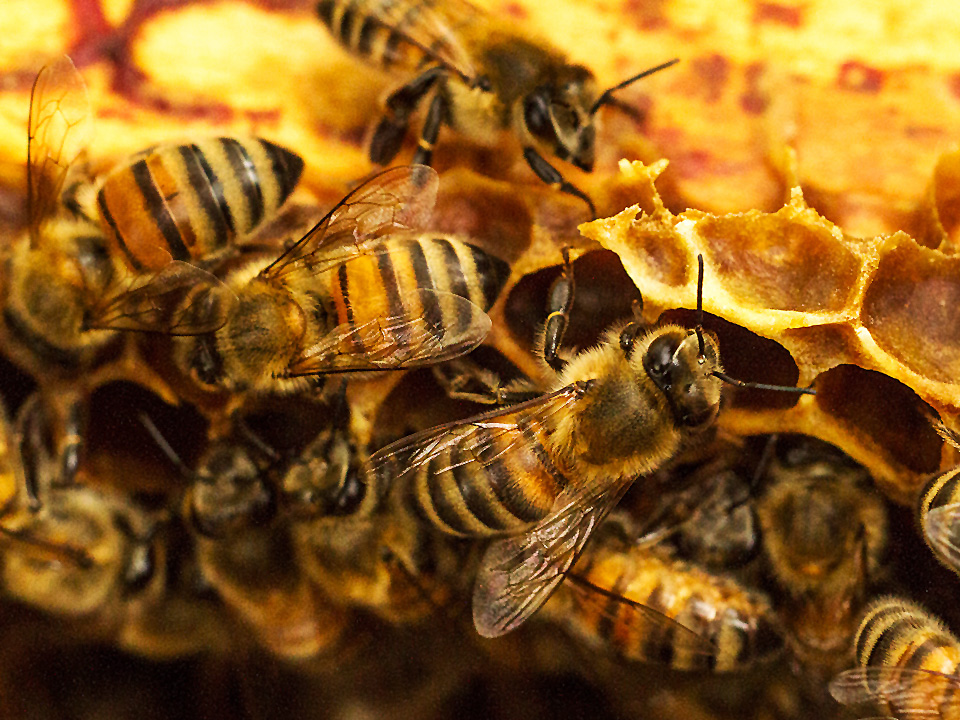
How do bees communicate? Through interpretive dance, of course! Image credit: Trypode via Flickr (https://www.flickr.com/photos/trypode/7561093332/)

How do bees communicate? Through interpretive dance, of course! Image credit: Trypode via Flickr

Choreography matters

The person who worked out how bees achieve this impressive feat was an Austrian scientist by the name of Karl von Frisch. His creative and painstaking research earned him the Nobel Prize in 1973.

Von Frisch marked individual bees within a swarm and watched closely where they went and what they did when they returned to the hive. Over decades of careful experiments he decoded the waggle dance.

The dance has a few key characteristics. After returning to the hive a ‘scout’ bee moves to the ‘dance floor’, a particular area on the honeycomb.

The simplest type of honeybee dance is the Round Dance — this lets other bees know that there is a good food source very close to the hive, usually within 50 metres.

But bees may forage more than 15 kilometres from the hive. To give directions to food further away, the bees waggle to communicate very accurately how to find that food.

The waggle is the first phase of the dance. Imagine the shape of a coffee bean — two semi-circles with a line down the middle. The bee waggles side to side while buzzing down that middle line, then turns either left or right and returns to the starting point via a semi-circle. The pattern also looks a bit like a figure-eight.

The bee repeats this pattern up to 100 times, thereby communicating three key pieces of information.

Direction, distance and quality

The angle of the forward waggle relative to an invisible vertical line is the direction of the flowers relative to the sun. So straight up means towards the sun. And the bees even update this angle as the sun moves across the sky. Now that is impressive!

But of course just knowing the direction of the food isn’t enough. The bees need to know how far they have to fly. No problem, the number of waggles in one figure-8 corresponds to the distance to the food.

Finally, the number of repetitions of the figure-8 pattern communicates the quality of the food source – just how much nectar is up for grabs.

The discovery that animals could communicate in such detail, and more-over symbolically caused a sensation.History of science researcher Dr Tania Munz

I think it’s fair to say outside of primates, this is the most complex animal communication we know about.

Now scientists have started to use the information they collect from honeybee dances to help with their own work. They argue that instead of spending huge amounts of time and money surveying habitats on foot, bees can tell us a lot about the quality and health of our natural habitats.

And how do animals like bees manage this feat of complex communication? We have no idea.

And sadly time to solve that mystery many be running out because bees are steadily disappearing from all over the world.

Links and stuff

Need more sleep, or just a placebo?

comments 2
Health / Psychology

It’s late. Really late. And you need to be up early. You’re tossing and turning. The later is gets the more stressed you feel. How are you going to get through the next day so sleep deprived? What if I told you all you need is to believe you got enough sleep?

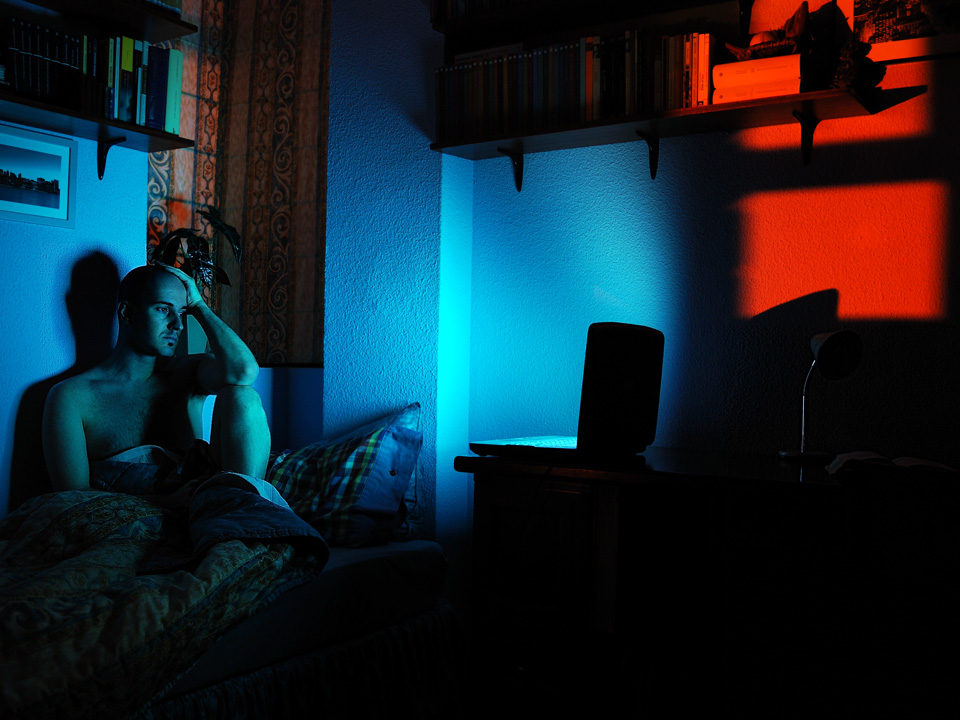
Not getting enough sleep? Could the placebo effect help you feel less tired? Image credit Carlos Martnz via Flickr.

Tired? Stressed? Having trouble sleeping? There’s a placebo for that. Image credit Carlos Martnz via Flickr.

The power of the mind

We’ve all heard of the placebo effect. There is undeniable evidence that taking a pill — any pill — can make us feel better, even if there are no active ingredients in it. The point is, if we think we’ve taken something that will help, it does.

The placebo effect is so well accepted that is now a standard part of clinical drug trials. And the placebo effect doesn’t just apply to illness.

If you tell people they have consumed caffeine, their brain function increases.

Placebo caffeine also improves reaction time performance in sleepy people.

How about exercise?

A group of 84 housekeepers working in hotels were split into two groups. Half of the women were told their job constituted good exercise and they were meeting the recommended daily exercise requirements simply by doing their job. The other half were not given that information.

Researchers measured a variety of health markers that are affected by exercise before and after this information was given to the first group. None of the housekeepers actually changed their behavior between the first and second measurement.

But the women in the first group, who believed they were getting good exercise every day, lost weight, and showed a decrease in blood pressure, body fat and waist-to-hip ratio.

Even fake surgery can do just as good a job as real arthroscopic surgery at reducing pain and other symptoms in people suffering from torn knee cartilage.

It’s all about expectation.

Can you get placebo sleep?

Now research out of Colorado suggests that our perception of how well we slept can effect how we perform the next day.

The researchers asked 164 people how deeply they had slept the night before.

The participants were then given a quick lesson on the effect of sleep on brain function. They were told normal adult sleep includes 20–25% REM sleep. Specifically, they were told people who don’t get enough REM sleep generally perform worse on learning tests and people who spend more than 25% of their sleeping time in REM sleep perform better.

They were then connected to a machine they were told could quantify how much REM sleep they had had the night before by measuring heart rate, pulse and brain wave frequently.

In fact the machine could do no such thing. The researchers had no way of knowing the quality of the participants sleep the night before.

The next stage of the experiment was to randomly assign people into one of two groups: ‘above average sleep’ or ‘below average sleep’. The participants were told they had either had 16.2 or 28.7 percent REM sleep the night before.

All of the participants then took a test called the Paced Auditory Serial Addition Test (PASAT). In the test, you hear a number every 1.6 seconds and have to add it to the previous number. It tests the speed and flexibility of auditory processing as well as your ability to calculate and attention span. These are some of the brain functions known to be most affected by sleep deprivation.

I think therefore I have… slept

People who believed they had slept badly the night before scored 44% correct on the PASAT. Those who believed they slept well scored 70% correct. These results were the same as in other research testing the actual effects of sleep deprivation on test performance.

So beliefs about quality of sleep were just as powerful as the effect of actual sleep quality.

Not a cure

Of course thinking you got enough sleep is no substitute for sleep deprivation. And the negative effects on your mind and body of not getting enough sleep are very real.

Sleep placebo isn’t going to solve any long-term problems associated with not getting enough sleep.

But it’s good to know a bad night’s sleep doesn’t rule how well your brain functions the next day. Convince yourself you got plenty of your sleep and your brain can rise to the challenge.

Links and stuff

Drinking water: can there be too much of a good thing?

Leave a comment
Biology / Health / Medicine

Water: it covers 97% of the planet, makes up almost two-thirds of each of us, and is a requirement for life as we know it. But did you know too much of it can kill you?

Share the love: this post was written by science communication student Abraham Jones.

Growing up I remember being told everyone should drink eight glasses of water a day. Recently though, I leant this is nothing more than one big urban myth. What certainly isn’t a myth though, is the danger of dehydration. Fatigue, dizziness, loss of consciousness, fevers, and sometimes death can all result from not drinking enough water.

So maybe drinking eight glasses of water isn’t such a bad idea after all. But what would happen if you drank eight litres of water, without going to the toilet? Most likely, you’d die. Called hyponatraemia in medicine — but commonly known as water poisoning — death from over-drinking water can be a real problem.

So where does all the water we drink go anyway? Most of it enters our bloodstream, and is then distributed around the body. But if there’s too much water in the blood, it moves out of the blood vessels and into cells via osmosis. Once water starts entering our cells, they quickly begin to swell. A little bit of swelling is fine and can be accommodated by our flexible cells, but too much swelling can cause serious problems.

A little water never killed anyone, but too much of it certainly can.

A little water never killed anyone, but too much of it certainly can.

Getting a big head

Normally our skulls prevent us from brain damage, but when our cells start to swell, our skull acts less like a permanent life-saving helmet, and more like a small prison for our brains.

As water content in the body increases, the brain literally swells in size. Quite quickly, the brain runs out of space and begins pressing against the inside of the skull. This increased pressure on the brain can ultimately be fatal if it isn’t reversed. And swelling of the brain can cut off the blood supply at the top of the spinal cord, leading to paralysis and brain death.

A watery grave

Death from water poisoning isn’t common, but there have been a number of well-documented tragic deaths resulting from it.

In 2005, a college freshman died from water poisoning after being forced to drink excessive amounts of water as part of a 20-year old hazing ritual in a Californian frat house.

Two years later, mother of three Jennifer Strange died from water poisoning after competing in a radio completion to ‘hold your wee for a Wii’. She entered to win the popular gaming console but died after drinking more than seven litres of water.

Many Australians may also be familiar with Anna’s story, the true story of 15- year old schoolgirl Anna Wood, who died from water poisoning whilst under the influence of ecstasy.

Luckily, fatal water poisoning occurs only rarely. When it does occur, there are often other factors which lead to the consumption of such a large quantity of water without it leaving the body via natural processes.

Imagine you were running a marathon, you would want to make sure you stayed hydrated, right? And so you should. But when the body is put under extreme physical stress, it increases production of anti-diuretic hormone, a chemical responsible for conserving water in the kidneys. This means less water will leave your body, and makes water poisoning more likely.

An unlikely killer

Taking ecstasy can also cause the body to lose its ability to regulate the amount of water in our systems. Famously, this is what killed schoolgirl Anna Wood, who started feeling sick after taking ecstasy at a party. Knowing the dangers of dehydration, Anna consumed large amounts of water, and was encouraged to continue drinking the sicker she became. Ultimately, it was the water, and not the drugs which killed her.

It turns out ecstacy-induced water poisoning is a relatively common phenomenon. Indeed, a paper published last year showed a high number of party-goers under the influence of ecstasy at an Amsterdam rave (where else!?) were suffering from mild water poisoning.

Evolution to the rescue

But fear not! It turns out poisoning yourself with water isn’t all that easy. A recent Melbourne study has shown our bodies have evolved to make it physiologically harder and harder to continue drinking once our bodies surpass our ideal water level. Just as we feel thirsty when we need to drink more water, this same thirst will go away once our bodies no longer need more water. In fact, keep drinking more and more and it will become physically harder to keep swallowing. So really the answer is simple: just listen to what your body is telling you!

Links and stuff

Something worth standing up for

comments 3
Biology / Health / Medicine

Think having a treadmill at your desk is a ridiculous fad? It may not be realistic for most workplaces but the idea is strongly rooted in science. You’re probably aware that sitting down all day is bad for your health. But just how bad? And is there anything you can do, short of quitting your desk job?

Regardless of how much exercise you do, it's those ing hours of prolonged sitting that are killing you.

Regardless of how much exercise we do, it’s the hours of prolonged sitting that are killing us.

Conserving too much energy

As someone who has spent many years studying animals in the wild, I’m well aware most animals will conserve energy whenever possible. Fortunately I never had to do round-the-clock koala observations but I know someone who did and let’s say it wasn’t exactly riveting stuff.

But it seems in the western world, humans have taken energy conservation to such an extreme that our daily habit of sitting for hours is killing us.

Back in 1953, a paper published in the respected medical journal The Lancet, reported conductors on London buses had only half the chance of heart attack compared with the drivers of the same buses. The authors’ explanation for the huge differences among the 31,000 men studied? The conductors spent all day on their feet, walking the length of the bus and climbing stairs on the double-decker buses. The drivers spent all day sitting on their backsides.

We all need more exercise

The Australian Government Department of Health recommends adults aged 18–64 years spend 2.5–5 hours doing moderate intensity physical activity per week (or 2.5 hours of vigorous physical activity each week). At the same time, we should ‘minimise the amount of time spent in prolonged sitting’. I can’t imagine any of that is news to you.

What you may not know is that you can do all the vigorous exercise you want, but if you still spend too long sitting down every day, the health effects can be dire.

Exercising isn’t enough

It seems cruel that even when you get plenty of exercise something as simple as sitting down can be so bad. But research suggests too much sitting is quite distinct from too little exercise. Research shows that two hours of sitting down can be just as bad for us as 20 minutes of exercise is good for us.

When we spend hours each day sitting (on average we spend 8 – 9 hours per day sitting while we drive, work, eat, watch TV or read), we are at increased risk of obesity, abnormal cholesterol, high blood pressure, back injury, diabetes and heart disease. Too much sitting has even been linked to increased risk of developing cancer of the lung, colon and in women, the endometrium. What’s more, the more time you spend sitting each day, the more at risk you are of premature death from any cause, regardless of how much exercise you do.

How much more at risk? In an Australian study of 220,000 people, those who sat for more than 8 hours each day had a 15% greater chance of dying in the next three years than those who sat for fewer hours per day.

Put another way, every additional hour people spent watching TV each day resulted in an 11% increase in the risk of dying. These results were true regardless of how much people exercised, their age, sex and waist circumference and whether and how much they drank and/or smoked.

Of course, part of the problem is that the hour you spent watching the latest episode of Game of Thrones is an hour you could have spent exercising. But it is much more than that.

Even on days we exercise, our muscles are spending too much time inactive. This is known as the Active Couch Potato phenomenon. In 2012, Finnish researchers asked their volunteers to wear shorts that contained flexible electrodes. So rather than relying on people keeping their own tallies of hours spent exercising or sitting (or using accelerometers), the shorts continuously measured the activity of the hamstring and quadriceps muscles.

Surprisingly, there was no difference in the amount of time spent sitting on days the Finns exercised compared with days they didn’t. It seems that on days we do our planned exercise, we tend to take it a bit easier the rest of the day.

So why is sitting still so bad for our muscles? Because when our muscles don’t contract often enough, instead of being pumped back to the heart, blood can pool in our legs. This causes damage to our arteries and results in blood vessels that can’t shunt blood around our bodies effectively anymore.

No-one can argue with the evidence: sitting down a lot is very bad for your health.

The solution is dumbbell free

Of course we should still prioritise getting enough vigorous exercise.

But we now know that just as important is breaking up our sitting time. Research that came out of the Baker IDI Heart and Diabetes Institute here in Melbourne shows that two minutes spent walking for every 20 minutes sitting has enormous benefits for our health. And the more breaks you take, the better it is for you.

Work out of Indiana University published last month found that three slow, five-minute daily walks were enough to counter the negative effects on your leg arteries of three hours of sitting.

So make sure you still run, surf, go to the gym or rockclimb. But don’t underestimate the power of walking to your colleague’s desk instead of sending them an email, pacing the room while you talk on the phone or using the bathroom one floor up. Even fidgeting in your seat is better than sitting still.

If you can, convince your boss to get you a sit/stand desk and, when you’re not at work, try to sit still as little as possible.

Maybe sitting is the new smoking.

Links and stuff

Dying to stay alive

Leave a comment
Biology / Health / Medicine

Imagine a loved one was just rushed to the hospital. They were caught in an armed robbery and suffered a gunshot wound. They have critical injuries but they’re losing too much blood too fast. Until very recently, the chance of them surviving in this condition would have only been about 7%. But a group of doctors at the University of Pittsburgh hospital have recently started doing something incredible to save these types of patients: they’re putting their bodies in a state of suspended animation and then bringing them back to life.

Share the love: this post was written by science communication student Emma Giles.

Patients with gunshot or stab wounds lose a lot of blood at the onset of the injury. By the time they get to the hospital, their heart has usually stopped beating. When the heart stops beating, blood stops flowing through the body and the various organs no longer receive all the nutrients they need.

This is particularly bad for the brain, which requires substantial levels of oxygen and glucose. In fact, it only takes a few minutes without oxygen before the brain is irreversibly damaged.

So doctors need to get that heart restarted — fast! But patients in these conditions also suffer from wounds that need immediate attention. In the worst cases, doctors just don’t have enough time to take care of the wounds before the patient dies from loss of blood.

But the Pittsburgh doctors have an amazing alternative that has the potential to save hundreds of lives.

A cool alternative

In order to buy some time and keep the brain damage-free, patients in this condition are treated with what the doctors are calling a “preservation technique”. A catheter is threaded into the patient’s aorta — the main artery of the heart. Their blood is drained out and stored, and cold saline solution — essentially salt water — is passed through the catheter. As the saline circulates, it fills the patient’s entire body and cools them down from 37 ºC to 10 ºC in just 15 minutes.

When the process is complete, the patient is empty of blood, unable to move or breathe. As far as medicine is concerned, they are clinically dead.

So how does cooling a patient down help doctors save their life?

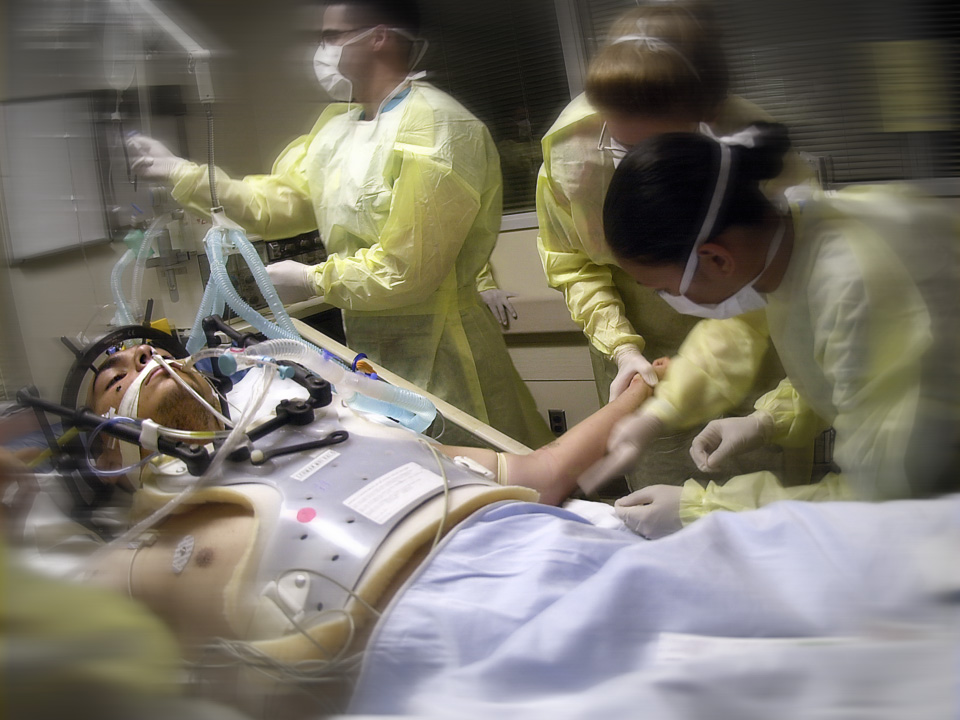
You've suffered a gunshot wound. You're losing blood and running out of time. Would you enter a state of suspended animation - clinically die - to buy doctors precious time to save your life? Image credit: US Navy via Wikimedia Commons.

You’ve suffered a gunshot wound. You’re losing blood and your organs are failing. Would you let doctors drain your blood and chill your body to 10 ºC, entering a state of suspended animation, to buy precious time that may save your life? Image credit: US Navy via Wikimedia Commons

Buying time

Well, when the body is lowered to cooler temperatures all of the chemical reactions that go on inside it slow down. This means the cells require a lot less oxygen to survive and can work with what they’ve got for longer.

Once the patient’s blood is replaced with cold saline solution and their bodies have cooled, surgeons have about an hour to fix the worst wounds. When that time is up, the blood is pumped back into the patient, their heart is restarted, and they are slowly brought back to normal temperature.

The preservation technique is now in a trial phase at the University of Pittsburgh Medical Center in Pennsylvania, USA. A patient suitable for the trial will have arrived at the hospital after a traumatic injury leading to cardiac arrest. They will likely have lost half of their blood supply and initial attempts to restart their heart will have failed.

Ethics…? schmethics!

The preservation technique has raised a few ethical concerns, particularly that patients would not be able to consent to this radical procedure. But the United States Food and Drug Administration, the body that has approved this procedure, often lifts the need for patient consent in the event of life-threatening situations.

The Pittsburgh community has also been raising awareness. Members of the community have been urged to request special arm-bands that indicate to doctors that they do not consent to the procedure. But so far, no one has requested to opt out.

What would you want to do if this was you? Would you die to stay alive?

Links and Stuff

Could fasting super­size your life?

comments 3
Biology / Health / Medicine

We’ve known for a long time eating less (much less) can prolong life in many animals. Researchers have carried out experiments on a variety of species over many decades asking the same basic questions: does eating fewer calories — and eating less often — prolong life? And do these eating habits also protect against disease? Given fasting diets are now all the rage, I decided to investigate the science. Is fasting good for humans?

Calorie restriction

Over the past 80 years, research on everything from worms to rats has shown reducing the overall amount of calories consumed (generally by 30–40%) extends life. Restricting calories, while still maintaining a nutrient-rich diet, is the only way we know to significantly increase lifespan in mammals. For example, mice can live up to 40% longer on a calorie-restricted diet. In many different species, a variety of biological pathways which slow ageing are switched on when only minimal calories are eaten.

But it is important to note these animals all have relatively short lives. Whether the same slowed ageing is true of humans is not yet clear. Even in other primates, results are not conclusive. In one 23-year study of rhesus monkeys published in 2012, the average lifespan of the monkeys was not extended by restricting overall calorie intake.

Compare this to a 2009 study which reported even moderate calorie restriction extended the life of the same monkey species. After 20 years, 50% of the animals fed a normal diet were still around, whereas 80% of the monkeys eating a reduced diet were still alive and kicking. And diabetes, cardiovascular disease and cancer were all lower in the monkeys not eating much.

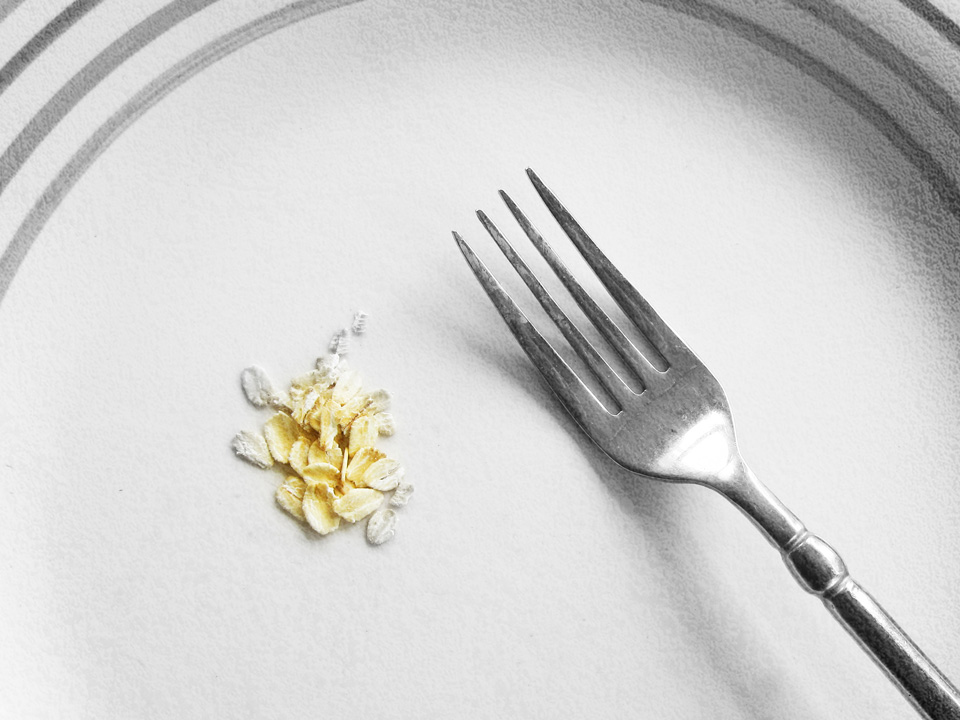
Could going hungry a couple of times a week prolong your life? Image credit: Nick Kenrick via Flickr.

Could going hungry a couple of times a week prolong your life? Image credit: Nick Kenrick via Flickr.

Who wants to be hungry all the time?

But for the past 70 years, research has also focused on a different strategy: intermittent fasting. This is essentially eating as per normal most of the time, punctuated by short periods of greatly reduced calorie intake. In 1945, experiments showed rats who fed only on alternate days received the same overall benefits in terms of increased lifespan as those eating less all the time.

And long-term studies of monkeys indicate fasting may not necessarily increase the length of life, but instead may protect against a host of diseases. Diseases like cancer, diabetes, cardiovascular disease, and various forms of brain degeneration. In a mouse study, results suggested intermittent fasting may protect the brain against diseases of ageing, such as Alzheimer’s.

We know from animal models that if we start an intermittent fasting diet at what would be the equivalent of middle age in people, we can delay the onset of Alzheimer’s and Parkinson’s. Mark Mattson, National Institute on Aging

Can we have our cake and eat it too?

Hence the school of thought that regular periods of fasting may give the same benefits as constant calorie restriction and have the power to prolong the years of life spent in good health. All this without having to go hungry, or at least not as often.

Fasting has long been an important part of many religions but it is fairly new for Western people to view fasting as a way to stay healthy.

One of the key arguments is that fasting acts as a mild form of stress on our bodies. This means our cells are always in a state of high defence against any form of damage. Research suggests intermittent fasting also makes our bodies more responsive to insulin, which in turn means we regulate blood sugar more effectively.

And by cutting access to food, we put our bodies into ‘repair mode’ rather than ‘growth mode’. This is a good thing for many diseases, for example by slowing the growth of cancer. In some mouse studies, cycles of fasting were found to be as effective as chemotherapy in slowing the growth and spread of cancerous tumours.

A widely publicised study this year found fasting for 3–4 days at a time had the power to essentially reboot the immune system, killing off old or damaged immune cells and generating new healthy ones. Importantly, fasting for three days before undergoing chemotherapy protected a small group of cancer sufferers from some of the toxic effects of the treatment.

In fact some experts argue that we evolved to go without food for intermittent periods. There would have been many times during our history when food was hard to come by and humans had to make do with not much. Others point out eating three meals per day is the most common pattern of eating in industrialised countries but there is no evidence this is the best way to consume nutrition or that it has any evolutionary history.

Enter the 5/2 diet

The 5/2 diet has been steadily gaining popularity since mid-2012. Essentially it involves 5 days a week of eating pretty much anything you want combined with 2 days a week of eating only a quarter of what you would normally eat (the suggested intake is 500 calories for women and 600 calories for men).

Dr Michael Mosely termed it the Fast Diet on the BBC’s Horizon program: Eat, Fast and Live Longer. There are growing numbers of devotees to the 5/2 diet (and many variants such as the alternate day fasting diet).

What’s the attraction?

Committed followers of intermittent fasting report significant weight loss, reduced levels of unhealthy cholesterol, reduced blood pressure, and improvements to diabetes.

One human study suggested intermittent fasting may protect against coronary heart disease. Another showed alternate day fasting improved asthma.

Dedicated intermittent fasters report fasting makes them more alert and more productive. This makes some evolutionary sense – if food is scarce you need your brain to work harder to find some.

Of course, there is also the argument that reducing your food consumption is good environmentally — reducing both food requirements and cost.

Is intermittent fasting the solution?

Does intermittent fasting provide the answer to obesity and various other modern health crises? Hmmm, not so fast!

First: a lot of the evidence comes from animals, not humans. Second: we just don’t have any good long-term studies of fasting in humans yet.

There have been some promising human studies including the one that showed huge improvements for asthma sufferers. Another study suggested that the 5/2 diet might help lower the risk of breast cancer.

In 2007, researchers concluded alternate-day fasting may protect against type 2 diabetes, cancer and heart disease, but they were quick to point out more research is required before we can be sure of the effects of intermittent fasting.

And even in animals, fasting isn’t without problems. In one study, rats on a long-term intermittent fasting diet ended up with increased blood glucose and, in another, rats developed stiffened heart tissue which made it much harder for the heart to successfully pump blood around the body.

Experts warn fasters may unknowingly consume insufficient nutrition and be at risk of diseases like osteoporosis. And of course fasting isn’t safe for pregnant or breastfeeding women, or for people with chronic conditions like diabetes. There is some evidence that fasting is bad for women in general.

Importantly, it been suggested fasting may be followed by periods of binging which could trigger or exacerbate eating disorders like bulimia. Others worry fasting brings about an unhealthy obsession with food in some people, which can also result in eating disorders.

At the end of the day, the benefits of intermittent fasting are unproven. But that doesn’t stop a lot of people reporting feeling fantastic when they follow this pattern of eating.

I must admit I’m yet to decide whether to give it a go. Are you a faster?

Links and stuff


Cancer detection made easier by man’s best friend

comment 1
Health / Medicine

Imagine if there was something accessible, reliable and non-invasive to detect cancer before we even knew we had it. Sounds too good to be true, doesn’t it? But scientists have been working on just this. So, what exactly is this exciting cancer detector? Dogs!

Share the love: this post was written by science communication student Emma Giles.

A dog’s nose knows

We’ve heard of dogs being used for medical purposes before, such as guide dogs to assist the blind or seizure dogs to detect and respond to an upcoming seizure in their owner. But how could dogs possibly detect cancer, especially before we can?

The answer lies in dogs’ phenomenal ability to detect smells. Dogs rely on their sense of smell just as we rely on our sense of sight. Compared to humans, dogs are up to 10,000 times better at identifying smells. In fact, the percentage of a dog’s brain devoted to analysing scents is almost 40 times greater than a human’s. Clearly, dogs are the experts when it comes to scents.

Dogs are up 10,000 times better at identifying smells than humans.

Dogs are up 10,000 times better at identifying smells compared to humans. Image credit ‘gfpeck’ via Flickr.

But what does a dog’s ability to detect smells have to do with detecting cancer?

Well, it turns out that the initiation and development of cancer is associated with oxidative damage. Oxidative damage occurs when there is an over-accumulation of free radicals in our bodies. When this happens, we release volatile organic compounds into the environment through our breath, urine or sweat. With their incredible sense of smell, dogs are able to detect the odour of these compounds.

Dogs can be trained to respond in a particular way to these changes in smell, just as dogs are used at airports to detect suitcases containing illegal substances.

Amazingly, dogs even seem to be able to respond to these odours without training. There are several cases in which dogs became fixated on a part of their owner’s body, pawing it or acting distressed. This often led the owner to discover a small lump or bump, which, upon doctor examination, turned out to be cancerous.

With their cunning sense of smell, dogs have proven to be surprisingly accurate when differentiating between cancerous and non-cancerous samples. How accurate, you ask? Up to 98% accurate! When provided with urine samples from patients with prostate cancer, trained dogs are now able to detect the cancer more reliably than the currently-used blood test.

Early detection matters

With cancer, the earlier it’s discovered the better. This is because the more the cancer grows, the harder it is to treat. When left untreated, cancer can also spread to other parts of the body which complicates and prolongs the treatment process.

One of the biggest problems standing in the way of catching cancer early is that some cancers are extremely difficult to spot in the early stages. This means that some patients have to get really sick before their cancer is detected, and at this point their chances of survival have greatly decreased.

The good news is that dogs seem to be able to pick up on the cancerous chemicals in the very early stages of the disease. And because dogs are able to do this from simple samples of urine or blood, the process poses no harm or discomfort to either the patient or the animal.

Dog scans in the doctor’s office

To put this early detection into practice, researchers have suggested that dogs could be used to screen samples from patients following a routine exam. For example, if an abnormality appeared on a mammogram, dogs could aid in identifying which patients should proceed with a biopsy, which could increase the early detection rate of breast cancer.

In fact, researchers have already shown that dogs can do just that with incredible success rates. A study published in the Journal of Integrative Cancer Therapies found that if a woman had a tumor in her breast, the dogs were able to find it 88% of the time. Amazingly, if the dogs did find a tumor, 98% of the time it was cancerous.

While dogs probably won’t be in the doctor’s office anytime soon, researchers are continuing to present intriguing findings that the medical community is having trouble ignoring.

Links and stuff